
Why General Liability Insurance Is Essential for Customer-Facing Businesses
Any business that interacts directly with customers carries unique risks. From foot traffic in storefronts to service visits at client locations, general liability insurance plays a critical role in protecting against unexpected incidents. This type of coverage helps safeguard customer-facing companies from legal and financial exposure that can arise during everyday operations.
Customer Interactions Increase Exposure to Accidents
When customers enter your business or you send staff to theirs, the chance of accidents increases. According to the National Safety Council, slip-and-fall incidents remain one of the most common sources of third-party injury claims for small businesses.
Social environments, foot traffic patterns, and physical layout all influence your exposure level. Customer-facing businesses rely on general liability insurance because it helps manage the unpredictable nature of human interaction.
Damage to Customer Property Is a Real Concern
Service providers, repair companies, contractors, and consultants often work inside customer homes or offices. Accidental damage to property can occur even with careful procedures. When businesses fail to protect their business against external claims, they risk huge expenses that could threaten the company’s future
Advertising and Personal Injury Risks
Customer-facing companies also interact with the public through advertising, online content, and social communication. General liability insurance can help address claims related to personal injury, including libel or copyright issues, depending on policy details.
Industry Requirements and Vendor Contracts
In many industries, vendors or landlords require proof of general liability insurance before allowing businesses to operate in shared spaces. Event venues, retail leases, and service contracts commonly list minimum liability limits as part of onboarding requirements. It is a good idea to review your coverages before major events or expanding into new operations.
Why these requirements exist
Businesses must demonstrate adequate protection
Liability limits align with shared-space risks
Contract compliance reduces conflict
Vendors may refuse to work with uninsured businesses
Proof of insurance builds trust
How Customer-Facing Businesses Can Reduce Liability Risk
While sufficient coverage is vital, there is a lot that you can do to minimize the risks ahead of time. These steps do not eliminate your liability, but they will reduce common hazards that often result in claims being filed against you.
Maintain organized, accessible walkways
Train employees on customer safety procedures
Document service steps and incident responses
Use signage for hazards or wet floors
Review liability limits annually as traffic grows
Short FAQ
Q: Do all customer-facing businesses need general liability insurance?
A: Yes, because exposure to visitor accidents and property damage exists in nearly every customer interaction.
Q: Does GL insurance cover employee injuries?
A: No. Employee injuries are handled under workers’ compensation insurance.
Q: Can GL insurance help with reputation-related claims?
A: Some policies include coverage for advertising or personal injury claims.
Disclaimer: This content is for informational purposes only and is not intended as legal or insurance advice.

Why Local Businesses Need Both Business Owners Insurance and General Liability Insurance
Local businesses face a mix of physical, financial, and legal risks that no single policy can fully address. While business owners insurance and general liability insurance are sometimes discussed together, they serve distinct functions. Understanding why both are important helps ensure your business remains protected against common exposures.
Business Owners Insurance Protects Your Physical Assets
Business owners insurance (often called a BOP) combines property coverage, liability protection, and business interruption into one policy. This structure helps businesses safeguard buildings, equipment, inventory, and operational income. For example, a fallen tree may impact your ability to function, but should not result in catastrophic losses.
General Liability Covers Third-Party Injury and Damage
General liability insurance focuses on legal claims that arise from everyday business activities. It helps cover bodily injury, property damage, and certain advertising injury situations that can occur during normal operations. The Federal Trade Commission provides a helpful explanation of how liability exposures arise through customer interactions and service activities.
Why Both Policies Matter
Carrying both policies ensures protection from internal and external risks. Business owners insurance shields your own property and income, while general liability covers claims brought by customers, vendors, or visitors. Business insurance should also include the possibility that your company may suffer from losses related to losses that are beyond control. Together, they address the two sides of risk: damage to your business and claims made against it.
Combined benefits
Protection for buildings and equipment
Coverage for third-party injuries
Support during business interruptions
Flexibility to add endorsements for specific industries
Broader alignment with vendor and lease requirements
Real-World Examples for Local Companies
A retail shop in Southlake might rely on a BOP to protect inventory from fire damage, while general liability helps cover injuries if a customer slips inside the store. A service contractor in Fort Worth may use general liability to address client-site accidents but still need a BOP for equipment protection in storage or transit. Operational variations are why many companies benefit from both policies simultaneously.
How to Evaluate Your Coverage Needs
Every company faces unique risks. Startups are focused on growth during the early years, for example, while established businesses need to protect what they have built. Here are a few examples of areas where business needs may vary a great deal:
Identify physical assets your business owns or leases
Review customer interaction levels and exposure to visitor injury
Consider business interruption risks
Check contract requirements from vendors or landlords
Review existing endorsements for accuracy and relevance
Key Takeaways
Business owners insurance protects physical assets and income.
General liability focuses on third-party injury and damage claims.
Most local businesses benefit from carrying both types of coverage.
Using both policies creates a more complete risk management strategy.
Coverage needs should be reviewed regularly as operations evolve.
Disclaimer: This content is for informational purposes only and is not intended as legal or insurance advice.

The Key Differences Between Business Owners Insurance and General Liability Insurance
Many business owners comparing business owners insurance and general liability insurance find the terms confusing — yet the differences are meaningful. Each type serves a distinct role in business risk management. Understanding those roles helps align coverage with real operational needs rather than buying protection based on terminology alone.
What Business Owners Insurance Covers
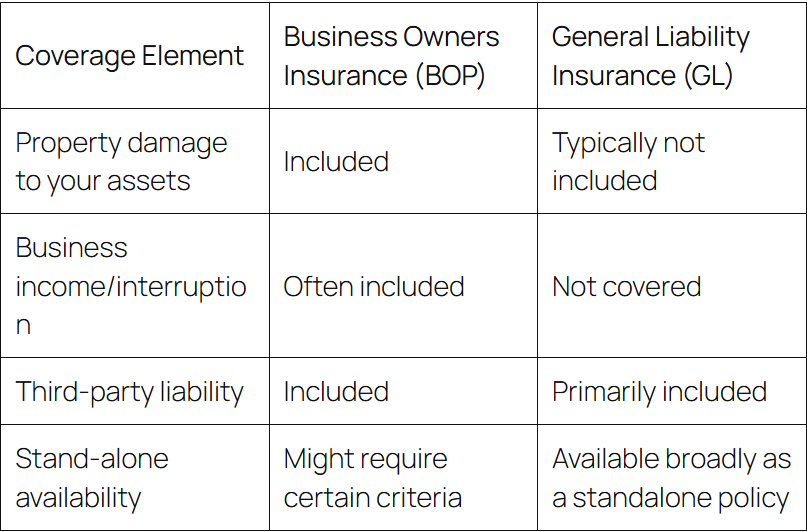
Business owners insurance (often called a BOP) is designed for smaller businesses that want a bundled solution combining property, liability, and interruption coverage. BOP packages typically cover property damage, equipment loss, and business interruption in one streamlined offering. Since the details vary both at the insurer level and the individual business needs, consulting with a reputable insurance agent is the best course of action.
What General Liability Insurance Covers
General liability insurance is more narrowly focused: it protects against third-party claims for bodily injury, property damage, and advertising or personal injury stemming from your business operations. Depending on your business operations, adding professional liability may provide protection that general liability policies ignore.
Key Differences Explained
A summary by IRMI reinforces that general liability focuses on external legal exposures, while broader business policies cover additional operational risks. To help clarify, here are comparison points to keep in mind:
Which Fits Your Business Better?
Choosing the right coverage depends on your business structure. For example, cybercrime and liability are important aspects of business insurance that are often overlooked. Other considerations include:
If you own or lease commercial space, invest in equipment, or face business interruption risk, a BOP likely offers more targeted protection.
If your operations are service-based, have low physical assets, and focus primarily on third-party exposures, GL might suffice.
Short FAQ
Q: Can I purchase both business owners insurance and general liability insurance?
A: Yes. In some cases a business may layer coverage where necessary.
Q: Does a BOP always replace general liability insurance?
A: No. Although a BOP includes liability, GL alone does not cover property or income risk.
Q: Is general liability enough if I have no property assets?
A: Possibly—but it’s wise to review your exposure, especially with vendor contracts and service-based risks.
Key Takeaways
Business owners insurance bundles property, liability, and income protection; general liability focuses on third-party legal exposures.
A BOP may offer more comprehensive coverage for businesses with physical assets.
GL insurance remains essential for liability but does not protect your own property or income.
The right choice depends on your asset base, operational risks, and business profile.
Work with your independent agency to evaluate which option aligns best with your current business structure.
Disclaimer: This content is for informational purposes only and is not intended as legal or insurance advice.

Why Independent Insurance Agents Are a Better Fit for Local Businesses
Local businesses need insurance support that adapts to changing operations, staffing, and growth. An independent insurance agency offers this advantage by aligning coverage with local and regional conditions in to address unique considerations. This flexible model helps business owners keep protection relevant over time.
Independent Agents Offer Broader Market Access
Unlike captive agents, independent agents can gather quotes from multiple insurers. This allows them to compare terms, endorsements, and premium structures on behalf of the business owner. Access to several carriers also makes it easier to adjust coverage during renewals.
Local Knowledge Supports More Accurate Coverage
Independent agents understand the specific risks that affect local businesses, from regional weather patterns to industry trends. Their familiarity with the community allows them to tailor coverage more effectively. This can be especially important in rural areas that face logistics and supply constraints.
Why local insight matters
Awareness of seasonal risks
Understanding local building requirements
Familiarity with common claim types
Knowledge of regional business growth patterns
Ability to identify gaps based on local regulations
Adaptability as Business Conditions Change
Commercial operations rarely stay static. New equipment, expanded services, or additional employees can change risk levels. Independent agents can quickly reassess coverage with other carriers when these shifts occur. For reference on managing workplace risks, explore guidance from OSHA.
Independent Agents Simplify Policy Reviews
Regular policy reviews help ensure that commercial coverage matches the business’s current needs. Independent agents make this process easier by checking multiple insurers for updated terms or better-aligned options. Where a captive agent is only able to offer coverages from a single insurance carrier, your independent agent can choose among carriers to find you the best rates and coverage.
Support Throughout the Insurance Cycle
Many independent agents provide ongoing support during claims, renewals, and documentation updates. This continuity makes it easier for small businesses to stay organized and prevent gaps. This may sound counterintuitive, but your local insurance agent can orchestrate excellent coverage and lower premiums at the same time.
Mini-guide for better insurance decisions
Keep updated records of business property
Document staff changes each year
Compare policy exclusions during renewals
Record major purchases for property updates
Track changes in services or equipment
Short FAQ
Q: Do independent agents work with small or large businesses
A: They work with both, but their flexibility is especially useful for small to mid-sized businesses.
Q: Can independent agents help with specialty policies
A: Yes. Their carrier network often includes insurers that write niche or unusual risks.
Q: Does working with an independent agent limit my carrier choices
A: No. It typically expands them.
Key Takeaways
Independent agents offer access to multiple carriers, giving local businesses more choices.
Regional knowledge helps tailor coverage to Southlake and surrounding communities.
Policy reviews become more effective with broader market access.
Changing business conditions are easier to manage through flexible carrier options.
Long-term support helps simplify insurance decisions for busy business owners.
Disclaimer: This content is for informational purposes only and is not intended as legal or insurance advice.

How to Prepare for a Business Insurance Policy Review
A business insurance policy review helps ensure your coverage still matches your operations, assets, and risks. For many business owners, an independent insurance agency provides the flexibility needed to adjust policies as the company grows. A smooth review starts with good preparation, clear records, and updated business details.
Understand Why Reviews Matter
Business conditions rarely stay the same. New hires, equipment, expansions, and changing liabilities all influence what your insurance should cover. A review prevents outdated limits or missing endorsements from creating financial gaps. A helpful overview of business insurance fundamentals can be found at the Small Business Administration.
Gather Updated Business Information
Before your review, make sure basic operational details are accurate. Even small changes can affect risk levels. If your company has added new services or adjusted how work is performed, those updates should be reflected in your insurance coverage.
Key items to prepare
Annual revenue figures
Number of employees
List of owned or leased equipment
Vehicle details if applicable
Property or office location changes
Review Current Policies Line by Line
A thorough evaluation begins with examining what you already have. Compare each policy section to your current operations. Liability limits, deductibles, and endorsements should align with the actual exposures your business faces.
Document Changes to Assets and Property
Any changes in equipment, inventory, or location should be addressed by your independent insurance agent. These details help determine accurate commercial property and liability protection. What this boils down to is that you don’t want to continue paying for something that has become obsolete, but should protect new items in your business operations.
Helpful mini-guide
Keep receipts or invoices for major purchases
Update the age and condition of equipment
Record serial numbers for high-value assets
Document security upgrades or building improvements
Note changes in storage or transportation methods
Prepare Questions for Your Independent Agent
A review is more productive when you understand what to ask. Independent agencies can compare coverage options across multiple carriers, so clear questions help tailor the discussion. Preparing for a business insurance overview may require you to do a little research before getting started, such as reading up on ways to achieve superior coverage without overpaying.
Questions to consider
Do my current limits match my business size
Are there new risks I should insure
Should I adjust deductibles
Are there coverage overlaps
Have carrier requirements changed
Short FAQ
Q: How often should a business review its insurance policies
A: Once a year is recommended, but major changes may require midyear reviews.
Q: Should I bring financial documents
A: Yes. Accurate revenue and payroll figures help determine proper coverage.
Q: Do equipment upgrades affect insurance
A: Yes. Updated assets should be recorded to match property and liability needs.
Key Takeaways
A policy review protects your business from outdated or insufficient coverage.
Organized records help your independent agent match policies to real operations.
Updated asset details lead to more accurate recommendations.
Clear questions make the review process more efficient and productive.
Regular evaluations help coverage stay aligned with growth and changing risks.
Disclaimer: This content is for informational purposes only and is not intended as legal or insurance advice.

What Makes Independent Insurance Agencies More Flexible for Business Owners
Business owners often need coverage that adapts to growth, seasonal changes, shifting risks, and long-term planning. An independent insurance agency provides this flexibility by offering more carriers, more choices, and more tailored guidance than single-carrier companies. This adaptable model supports business owners in Southlake and across Texas who want options that align with real-world operational changes.
Independent Agencies Work With Multiple Carriers
Instead of relying on one insurer, independent agencies partner with numerous carriers, allowing businesses to compare coverage, pricing, and underwriting differences in one place. When market conditions change, the agency can realign options without forcing the business owner to restart the shopping process.
2. Policies Can Adjust to Business Growth
As a business adds employees, equipment, vehicles, or locations, insurance needs evolve. Independent insurance agencies can adapt policies quickly because they are not locked into one carrier’s structure. This helps owners maintain appropriate business protection during expansion or operational changes.
3. Local Insight Strengthens Coverage Decisions
Local agencies understand regional risks such as severe weather, population growth, and industry patterns that affect small and mid-size businesses. This regional awareness helps create more practical coverage recommendations. For a broader look at risk factors that influence commercial insurance, review these findings from the National Safety Council.
4. Clear Guidance for Complex Coverage Types
Business owners often face confusing coverage decisions involving liability, commercial property, professional exposures, and cyber-related risks. Independent agencies break down these details and help owners compare policy structures from different carriers.
Helpful mini-guides for business owners
Review policy limits annually to reflect asset changes
Map insurance needs to current operations
Track renewal timing to avoid unintentional coverage gaps
Keep an updated list of high-value equipment
Identify new exposures created by digital tools or remote work
5. Easier Bundling Across Carrier Options
Bundling coverage can improve consistency and reduce administrative complexity. Independent agencies can compare bundled packages from multiple carriers, giving business owners more flexibility to align benefits and pricing with daily operations.
What Business Owners Should Evaluate
A flexible insurance strategy depends on understanding how operations shift throughout the year. Independent agencies help identify potential weak points before they become costly problems.
Key evaluation areas include:
Staff additions or role changes
Equipment upgrades or new vehicles
Multi-location expansions
New digital tools or online sales channels
Updated vendor or client requirements
Short FAQ for Business Owners
Q: Do independent agencies cost more?
A: No. Their value comes from broader access to carriers and tailored guidance.
Q: Can they help with unusual or specialized risks?
A: Yes. Multiple carriers allow more options for unique exposures.
Q: Is support available during claims?
A: Many independent agencies assist clients through each step of the process.
Key Takeaways
Independent insurance agencies offer flexibility by working with multiple carriers.
They adjust coverage as businesses grow or change.
Local insight and advisory support help owners avoid coverage gaps.
Bundling becomes easier when multiple carriers are available.
Regular evaluation ensures business protection stays aligned with real operational needs.
Disclaimer: This content is for informational purposes only and is not intended as legal or insurance advice.

General Liability vs. Professional Liability: What’s the Difference?
Many business owners assume that one insurance policy can cover every type of risk—but that’s rarely true. Understanding the difference between general liability insurance and professional liability coverage is essential for ensuring your company is protected on all fronts. Together, they form a powerful foundation within your business owners insurance strategy.
General Liability: Coverage for Everyday Risks
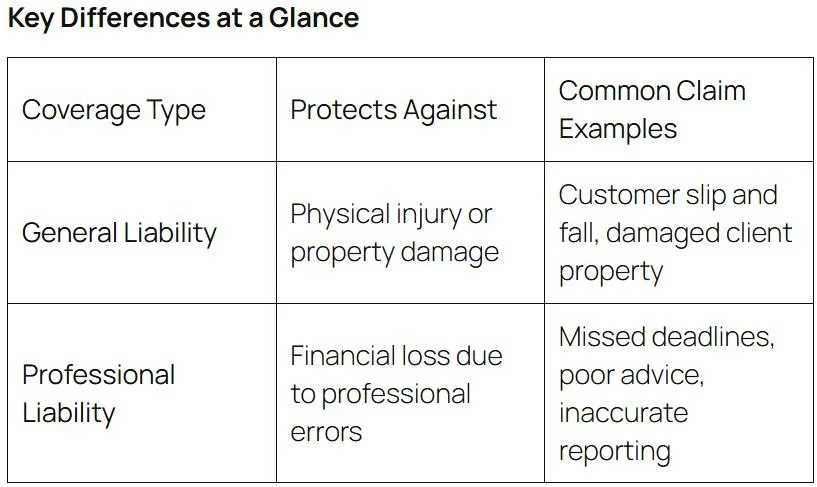
General liability insurance protects your business from third-party claims involving bodily injury, property damage, or personal harm caused by your operations. For example, if a client slips on your office floor or a contractor accidentally damages a customer’s property, this policy pays for legal defense, settlements, and medical costs.
It’s the first line of defense for most businesses because it addresses physical and situational risks that can happen during daily operations. General liability is typically included in a Business Owners Policy (BOP), offering broad protection for common incidents that could otherwise disrupt cash flow or reputation.
Professional Liability: Coverage for Errors and Omissions
Professional liability, also known as errors and omissions (E&O) insurance, covers claims related to professional mistakes, negligence, or failure to deliver promised results. This coverage applies to businesses that provide specialized expertise—consultants, architects, accountants, and service providers of all kinds.
If a client claims your advice or work caused financial loss, professional liability insurance covers the cost of defending your business and paying any judgments or settlements. It focuses on your performance and decision-making rather than physical accidents.
Why Both Types May Be Necessary
It’s common for growing businesses to assume they only need one type of policy. However, general and professional liability cover entirely different risk categories. A marketing firm, for instance, could face a slip-and-fall injury at its office (general liability) and a lawsuit over a failed advertising campaign (professional liability). Without both, significant coverage gaps remain.
Bundling these coverages under a business owners insurance policy can simplify administration and sometimes reduce total premiums. Your agent can tailor a plan that fits your profession and exposure level, ensuring each policy complements the other.
How to Choose the Right Balance
Evaluating your risk profile with an experienced independent agent helps determine where your greatest exposures lie. If you provide consulting or technical services, professional liability is likely essential. For companies interacting frequently with customers or the public, general liability is nonnegotiable. Many businesses need both, tailored with the right limits and deductibles.
The bottom line: each coverage plays a unique role in keeping your company secure. Together, they ensure that one unexpected event—whether a lawsuit or a simple accident—doesn’t jeopardize years of work.

What Business Owners Should Know About Claims & Legal Defense Costs
Even the most careful business owners face the possibility of lawsuits. A single claim, whether it involves a customer injury, property damage, or contract dispute, can quickly lead to expensive legal fees. Knowing how business owners’ insurance and general liability insurance respond to these situations helps you plan to avoid financial surprises.
Understanding the Basics of Liability Coverage
General liability insurance protects your company when someone claims bodily injury, property damage, or personal harm resulting from your operations. It typically covers both settlements and the legal defense costs needed to resolve the case. Defense costs include attorney fees, court expenses, expert witnesses, and administrative costs related to the claim.
For most policies, these defense expenses are paid in addition to your coverage limits. That means if your policy limit is $1 million, and your defense costs reach $100,000, your insurer covers both—unless the policy states otherwise. Always confirm this detail during renewal so you know exactly how much protection your business has.
When Business Owners’ Insurance Adds Extra Protection
A business owners insurance policy combines general liability with property and business interruption coverage, creating a streamlined solution for small and midsize businesses. While liability coverage handles lawsuits, the property portion protects your physical assets, and the business interruption section replaces lost income during downtime.
This bundled structure often simplifies claims handling. When a single event triggers multiple losses—such as a fire that damages property and causes injury—your carrier coordinates all aspects of the claim through one process, saving time and reducing administrative headaches.
The Rising Cost of Legal Defense
Litigation costs have climbed sharply in recent years, even for minor disputes. Attorney rates, expert analysis, and discovery costs all add up quickly. Without the right coverage, small businesses can spend tens of thousands defending a claim, even if they ultimately win.
Comprehensive general liability insurance ensures that these costs don’t come directly out of your operating budget. Some policies also include coverage for pre-litigation investigations and arbitration; important benefits that can reduce total exposure before a case reaches court.
Managing Claims Effectively
The best time to think about claims is before they happen. Establishing clear internal procedures helps prevent errors that could jeopardize coverage. Assign someone in your organization to manage incident documentation, communicate with your insurer, and coordinate with legal counsel as needed.
Timely reporting is essential. Most policies require prompt notice of potential claims, even if no lawsuit has been filed yet. Waiting too long can complicate coverage eligibility or reduce available benefits.
Partnering With the Right Agency
An experienced agent helps ensure your coverage reflects today’s legal realities. By reviewing past claim trends and industry benchmarks, your advisor can recommend higher limits, umbrella protection, or endorsements that extend defense coverage. Working with a proactive professional means your policy will adapt before legal costs outpace your protection.
Understanding how legal expenses are handled is critical to building a sustainable risk management plan. The right combination of business owners and general liability coverage can turn unexpected claims into manageable challenges instead of financial crises.

Risk Management That Lowers Your Premiums: Practical Tips
Business insurance is designed to protect your company, but smart risk management can also make it more affordable. By demonstrating to insurers that you actively prevent losses, you can often qualify for lower premiums and better coverage terms. Understanding how business owners insurance and general liability insurance complement each other is key to building a cost-effective protection plan.
Keep Safety Programs Current and Documented
Insurers reward businesses that maintain a clear record of safety practices. From fire prevention systems to employee safety training, every measure that reduces risk can positively impact your premiums. Make sure to keep documentation updated, including records of equipment inspections, staff certifications, and compliance audits prove that safety isn’t just a promise but a measurable practice.
Even small updates can make a difference. Installing better lighting, upgrading locks, or conducting quarterly facility checks all signal lower exposure to loss. These actions build a consistent safety record that insurers use when reviewing renewals.
Bundle and Balance Coverage Wisely
Many growing companies hold multiple policies across different carriers without realizing they could be combined. A business owners insurance package is a simple way to bundle policies like general liability, property, and business interruption coverage at a lower total premium than separate policies.
The goal isn’t to cut corners but to eliminate overlap. Your agent can review where coverage duplicates or where small increases in limits could yield much greater protection. Balancing coverage efficiently ensures you aren’t overpaying for unnecessary add-ons.
Build a Culture of Risk Awareness
Policies alone don’t lower premiums—people do. Encourage employees to report potential hazards early and participate in safety programs. Businesses with an engaged team experience fewer incidents, and insurers take note. Whether it’s reducing slips and falls or improving data security protocols, employee participation directly translates to lower risk scores.
Regular communication matters too. Sharing updates about safety initiatives or incident-free milestones helps reinforce accountability across departments. If your operations, equipment, or other factors change, your insurance needs to adapt with them. The alternative is an insurance policy that slowly loses its effectiveness at protecting your company.
Leverage Technology for Prevention
Modern tools like remote monitoring systems, cybersecurity software, and environmental sensors can reduce both frequency and severity of claims. Installing automatic leak detectors or intrusion alarms can cut property losses, while using encrypted systems and multi-factor authentication minimizes data breach exposure. These upgrades demonstrate proactive management—something insurers often reward with rate credits.
Your agent can help identify which preventive technologies align best with your general liability insurance and other policies.
Annual Reviews and Continuous Adjustment
An annual review with your insurance professional ensures your policy limits match your current operations. Adding new services, expanding locations, or upgrading equipment without adjusting coverage can leave you under protected—or overpaying for outdated conditions.
By reassessing policies regularly, you maintain an accurate reflection of your company’s size, structure, and risk profile. This proactive approach not only prevents coverage gaps but also signals responsibility to underwriters, which can keep rates stable over time.

Emerging Risks: Why Cyber and Climate Insurance Belong in Your Plan
Every year brings new business challenges and new risks. Modern companies must protect not only their physical assets but also their data, digital systems, and supply chains. Forward-thinking owners recognize that business insurance is evolving, and emerging coverages like cyber and climate insurance are becoming crucial parts of a well-rounded risk strategy.
Cyber Threats: The Invisible Risk Factor
Small and midsize businesses are prime targets for cyberattacks. Whether it’s phishing scams, ransomware, or data breaches, these incidents can lead to costly downtime, legal fees, and reputation damage. Traditional liability policies rarely cover digital risks in full, leaving many businesses exposed.
Cyber insurance steps in to bridge that gap. It covers recovery costs, data restoration, and even public relations expenses after an incident. For companies handling customer data, online payments, or remote work systems, this protection has become essential. Your independent insurance agency can help you compare different coverage options, ensuring you find the right blend of affordability and defense.
Climate and Environmental Threats
Extreme weather events are now a constant consideration for business continuity. Wildfires, floods, and storms can halt operations, damage property, or disrupt logistics overnight. Yet many companies underestimate how these exposures affect their insurance needs.
Climate-related coverage options are expanding fast. Some insurers now offer policies that specifically address disaster recovery, supply-chain interruptions, or green rebuilding initiatives. An experienced independent agency can identify which of these evolving options best fit your location and industry.
How an Independent Agency Brings It Together
Working with an independent insurance agency allows business owners to stay ahead of evolving challenges. Instead of relying on a single carrier’s limited offerings, your agent can source quotes from multiple insurers specializing in emerging coverages. This flexibility ensures your policies evolve alongside the marketplace—not after it’s too late.
Independent agents also help you interpret policy fine print. For example, some cyber policies exclude coverage for social engineering attacks, while others limit recovery costs to a small percentage of the total claim. Having a broker who understands these nuances can make the difference between partial and full recovery after an event.
Integrating Emerging Risks into Your Core Plan
Adding new policies doesn’t mean overhauling your entire insurance structure. The best approach is integration—folding emerging coverages into your existing business insurance portfolio. Your independent insurance agency will align coverage limits, coordinate renewals, and make sure there are no overlaps or gaps between traditional and modern protections.
This proactive approach reflects what top-performing companies already practice: risk management as strategy, not reaction. Cyber and climate insurance aren’t fringe policies anymore. They have become integral to long-term resilience.

How Independent Insurance Agencies Compare Multiple Quotes for You
For most business owners, choosing the right insurance policy isn’t about finding the cheapest rate—it’s about balancing cost with coverage. That’s where an independent insurance agency stands apart. Instead of selling policies from one carrier, an independent agent compares multiple business insurance options across different insurers to help you make a smart, informed decision.
Understanding the Role of an Independent Agency
An independent insurance agency acts as your advocate, not representing any specific insurance company. Their goal is to understand your business operations, identify your unique exposures, and find policies that truly fit your needs. Because they work with many carriers, they can compare quotes side by side—helping you see the differences in coverage limits, deductibles, exclusions, and pricing before you commit.
This broad market access gives business owners a stronger position at renewal time too. Instead of being stuck with one provider’s rates, your independent agent can revisit the market each year to ensure your protection remains both competitive and comprehensive.
Step One: Analyzing Your Risk Profile
Every quote comparison begins with an in-depth risk assessment. Your agent reviews details like annual revenue, number of employees, types of clients, and the nature of your work. These factors influence how carriers evaluate your risk and set premiums. By presenting your business accurately and professionally, your agency increases the likelihood of receiving better terms and broader options.
Startups, for example, may need basic liability and property coverage. Established companies might expand into specialized business insurance such as errors and omissions, cyber liability, or commercial auto policies. Your agent ensures the quotes you receive reflect these evolving needs.
Step Two: Comparing Quotes Side by Side
Once they arrive, your independent agent organizes quotes into a clear, comparable format. This allows you to see not only price differences but also coverage gaps and added benefits. You might discover that one carrier offers higher limits for only a small premium increase, or that another provides unique protections like equipment breakdown or hired and non-owned auto coverage.
Your agent’s job is to translate the industry jargon and show which option truly aligns with your business goals. This side-by-side comparison is what transforms a confusing process into a confident, data-driven choice.
Step Three: Tailoring the Final Package
After selecting your preferred provider, your agency works directly with the carrier to finalize coverage details. They’ll adjust endorsements, update limits, and ensure compliance with any contractual requirements you might have. Because they manage multiple insurer relationships, independent agencies can negotiate small but meaningful improvements that captive agents simply can’t.
The Long-Term Advantage
Over time, your business will change; adding employees, upgrading equipment, or entering new markets. Having an independent agency means you don’t need to start over each time. Instead, your agent will continuously re-shop the market and align your protection with your company’s growth.
Partnering with a trusted independent insurance agency offers not just convenience but confidence. It ensures that your business insurance evolves with you, always balancing the right coverage with fair, transparent pricing.

From Startups to Scaleups: Adapting Your Insurance Strategy
Building a business means learning to evolve. The risks you faced in your first year rarely look the same once you begin hiring employees, expanding locations, or signing major contracts. A well-planned business insurance strategy should grow alongside your company, protecting new assets, managing liability, and keeping operations stable through each stage of development.
Early-Stage Focus: Protecting the Foundation
Startups often operate on thin margins and tight resources. At this stage, insurance should focus on survival—covering essential risks like general liability, property damage, and business interruption. Many entrepreneurs start with a Business Owners Policy (BOP), which bundles core protections at an affordable rate. It’s a solid foundation that prevents a single unexpected event from derailing early momentum.
As operations mature, the BOP may no longer be enough. You might need additional business insurance coverage such as professional liability or cyber insurance, especially if your company manages client data or offers digital services. These upgrades help balance cost control with growing legal and reputational exposure.
Mid-Growth Challenges: Expanding Responsibility
When a startup becomes a scaleup, its risk profile expands quickly. New employees bring workers’ compensation needs, new vendors raise contract liabilities, and new customers create higher stakes for service delivery. Many scaleups also move into leased offices or warehouses, adding property and equipment protection to their portfolio.
This is the stage where working with an independent insurance agency is especially valuable. Independent agents aren’t limited to one carrier. They can compare coverage options across multiple insurers, tailoring your protection to match your company’s unique pace of growth. That flexibility allows scaling businesses to make adjustments without starting from scratch.
Scaling Up Smart: Insurance as a Growth Tool
Insurance isn’t only about reacting to risk—it’s a tool for enabling growth. Companies that plan ahead for compliance, employee benefits, and liability management can pursue contracts and partnerships with greater confidence. Many large clients and investors require proof of specific insurance limits before signing deals, so keeping coverage up-to-date directly supports expansion goals.
Reviewing your coverage annually is a smart practice, even when nothing seems to be changing. Market conditions, inflation, and updated regulations can alter your exposure in ways that aren’t immediately obvious. A good agent will proactively identify those shifts before they turn into expensive surprises.
Long-Term Stability and Risk Culture
As your business matures, risk management becomes part of your company culture. Rather than viewing it as an expense, successful companies treat insurance as a strategic investment that helps protect brand reputation, employee well-being, and customer trust. This mindset ensures that growth remains sustainable instead of fragile.
Working with an experienced independent agency helps keep that perspective grounded in reality. With ongoing policy reviews, benchmark comparisons, and expert advice, you’ll always know your protection matches your current size and future ambitions.

4 Cyber Threat Insurance Tips That Businesses Love
Cybersecurity isn’t just a big-company issue. Small and mid-sized businesses are increasingly targeted by phishing, ransomware, and vendor-related breaches that can disrupt operations and strain cash flow. That’s why it’s smart to combine strong defenses with the right business owners insurance. Cyber liability coverage is most effective when it’s part of a broader risk plan.
Understand What Cyber Insurance Covers
Cyber insurance policies commonly address first-party costs (forensic investigation, data restoration, breach notification, crisis management) and third-party liability (regulatory actions, privacy lawsuits, and contractual claims). Read exclusions carefully because social engineering, voluntary transfers, and vendor-caused incidents are often limited or require endorsements. Align limits and sublimit with your real exposure (records held, downtime risk, and dependency on key vendors).
Pair Insurance With Robust Security Measures
Insurers increasingly expect baseline controls: MFA on email and remote access, endpoint protection, encrypted backups with offline copies, and staff phishing training. These reduce loss frequency and can improve insurability. A layered approach strengthens claims positions and may lower premiums over time. Round out your program with strong general liability insurance for non-cyber third-party risks.
Tailor Policies to Industry Risk
Threats vary by sector. Retailers worry about payment data; healthcare and professional firms face privacy and confidentiality exposures; manufacturers and logistics depend on operational tech and supplier networks. Choose forms that match your profile (PCI exposure, PHI/PII volumes, critical vendors) and verify business-interruption triggers. For an independent overview of coverage types and limitations, see Cyber insurance: a key part of a robust business strategy.
Have a Clear Incident Response Plan
Speed matters. Document who to call (IT, legal, forensics, carrier hotline), how to isolate systems, and what to tell customers and partners. Practice tabletop drills so roles and thresholds are clear. Keep vendor contracts and an asset inventory handy to accelerate containment and notification. Update your plan after each drill or near-miss.
Additional Insight: Leverage Insurance as a Strategic Asset
Many policies include complimentary services—risk assessments, training modules, vulnerability scans, even incident coaches. Use them to harden controls and justify higher limits as you grow. For a business-wide perspective that includes cyber, read Business Insurance Coverages You Can’t Afford to Ignore.
Cyber Insurance FAQ
Q: Do all businesses need cyber insurance?
A: If you store customer data, process payments, or rely on cloud tools, yes—your operations carry cyber risk that insurance can help transfer.
Q: Is cyber coverage expensive for small businesses?
A: Pricing depends on controls, industry, and limits, but many small firms find entry-level coverage affordable, especially when packaged with other policies.
Q: What factors influence the cost of cyber insurance?
A: Carriers evaluate company size, industry, claims history, and security measures in place. Strong cybersecurity controls often lead to lower premiums.
Q: How quickly can a cyber insurance policy respond after a breach?
A: Many policies provide access to 24/7 response teams, allowing businesses to engage forensic experts, legal counsel, and notification services immediately.
Protect cash flow, reassure customers, and keep the business running. Your independent issuance agent can help you combine comprehensive coverage with prevention and a tested response plan.

Most Popular Insurance Savings Tips for New Business Owners
Starting a business requires energy, planning, and plenty of financial commitment. With so many expenses to cover, it’s no surprise that new business owners look for ways to save on insurance without sacrificing protection. The good news is that smart strategies exist to keep coverage affordable while still maintaining peace of mind.
Compare Multiple Quotes
One of the simplest ways to save is by shopping around. Insurance premiums can vary widely between carriers, even for similar coverage. Gathering several quotes allows business owners to spot outliers and negotiate for better rates. Comparing policies also ensures that coverage details match business needs. According to the U.S. Small Business Administration, reviewing quotes annually helps businesses keep coverage affordable.
Bundle Policies
Insurers often offer discounts when multiple policies are purchased together. A common example is combining general liability, property, and business interruption coverage into a single package. Bundling not only reduces costs but also simplifies administration by consolidating renewal dates and paperwork. For busy entrepreneurs, this approach saves both money and time.
Raise Deductibles Responsibly
Increasing deductibles can lower monthly premiums. However, new business owners should choose deductibles they can realistically pay in the event of a claim. A balanced approach helps manage costs without exposing the business to financial stress if an incident occurs. Owners should review cash flow before selecting deductibles to ensure they can comfortably handle an unexpected payment.
Invest in Risk Management
Proactive safety measures can directly impact insurance rates. Installing security systems, providing employee training, or updating fire suppression equipment often results in lower premiums. Insurers see these efforts as reducing the likelihood of claims, and they reward businesses that take risk seriously. Creating a culture of safety not only lowers insurance costs but also improves employee confidence and customer trust.
Work With an Independent Agent
Independent insurance agents are not tied to one carrier. They can compare options across several companies to find coverage that fits both budget and risk profile. For new business owners navigating policies for the first time, this guidance ensures smarter decisions and long-term savings. An experienced agent can also identify hidden discounts, recommend policy updates, and act as an advocate when claims arise.
Leverage Industry Associations
Many trade groups and professional associations offer access to group insurance plans. These policies are often negotiated at lower rates than individual coverage. Joining an industry association can reduce premiums while also providing valuable networking and educational opportunities. For a start-up operating on a tight budget, association-based coverage can be a cost-effective way to build a solid insurance foundation.
FAQ
Q: Is it safe to raise deductibles as a new business?
A: Yes, as long as the deductible amount is realistic for the business’s cash flow. The savings on premiums can be worth it if chosen carefully.
Q: Do insurers always offer bundling discounts?
A: Not always, but many do. It’s best to ask about package options when requesting quotes.
Insurance is a necessary investment, but it does not have to overwhelm a start-up’s budget. With strategies like comparing quotes, bundling, and working with independent agents, new business owners can secure strong coverage at manageable costs.

Is Errors And Omissions Insurance Coverage You’ll Want?
Running a business means providing services, advice, or deliverables that clients depend on. But what happens if something goes wrong? An oversight or miscommunication can quickly lead to problems. Errors and omissions (E&O) insurance, also known as professional liability insurance, addresses these risks. For many small businesses and contractors, it is more than an option. Business insurance coverage is a safeguard that protects both reputation and financial stability.
What Errors and Omissions Insurance Covers
E&O protects businesses when clients claim work was negligent, incomplete, or inaccurate. For example, if a consultant’s recommendation leads to a financial loss or a project fails to meet specifications, this policy can cover legal defense costs, settlements, or judgments. This differs from general liability, which focuses on physical injuries or property damage. E&O coverage is tailored to the service or advice a business provides, which makes it especially important for professionals who deliver expertise rather than physical products.
Why It Matters for Small Businesses
Even the most careful professionals make mistakes. The average professional liability lawsuit can range from $3,000 to $150,000, with small businesses often facing tens of thousands in defense costs alone. Professional liability insurance typically costs $61 to $82 per month, equating to $735 to $984 annually, depending on industry and risk level. That level of protection dramatically reduces the financial risks of errors. For many business owners, the cost of a policy is far less than the expense of even a single legal dispute.
Cost-Saving Strategies to Consider
Premiums vary based on risk exposure, industry, and coverage limits. Small businesses often save by comparing multiple quotes, choosing higher deductibles, or paying annually to reduce costs. Many also find better value through bundled policies that include other insurance products. Another strategy is maintaining strong client contracts that clearly outline responsibilities. This practice can reduce disputes and may even lower insurance costs over time.
Industries That Rely on E&O Coverage
While nearly any business can face liability claims, certain industries rely heavily on E&O protection. These professions often deliver specialized advice or services where even small mistakes can create significant client losses. Because of that, E&O coverage is considered a standard safeguard rather than an optional policy in these fields.
Consultants and advisors
Contractors and builders
IT professionals and developers
Real estate agents and brokers
Marketing and creative services providers
Added Value Beyond Protection
Carrying E&O coverage signals professionalism and accountability. It reassures clients and stakeholders that you are prepared for unexpected challenges. Having coverage also creates peace of mind for business owners. Instead of worrying about whether a mistake could lead to a lawsuit, they can focus on delivering quality work. This kind of confidence often translates into stronger client relationships and repeat business.
Internal and External References
For an authoritative external perspective on professional liability coverage, refer to the SBA’s guidance on professional liability. Additionally, keep in mind that your policy needs to be updated periodically to keep it current with changes in your operations..
Mistakes happen, but they do not have to destroy your business. E&O insurance provides a safety net that protects finances, preserves reputation, and strengthens client relationships. Hulett Insurance helps business owners in Southlake and nearby communities explore whether this coverage fits their specific risks.

6 Most Important Contractor Insurance Options You'll Want
Contractors face unique risks on every project site. From accidents involving workers to property damage and liability claims, one incident can lead to costly setbacks. That’s why the right business insurance coverage is a foundation for any contracting business. What policies do contractors consistently rely on to protect their operations and reputation? Explore business insurance coverage in Southlake for details.
General Liability Insurance
This policy is considered essential for contractors. It covers third-party injuries, property damage, and legal expenses. Imagine a client’s property being damaged during a remodel. Without general liability coverage, the contractor would pay out of pocket, risking both profits and reputation.
Workers’ Compensation Insurance
Construction work carries a high risk of injury. Workers’ compensation insurance covers medical expenses and lost wages for employees hurt on the job. Beyond protecting staff, it shields contractors from lawsuits that can follow workplace accidents.
Commercial Auto Insurance
Contractors often depend on fleets of trucks, vans, or trailers. Commercial auto insurance protects vehicles, drivers, and transported materials. Whether it’s a collision on the highway or theft of tools from a company van, this coverage ensures contractors can continue working without major financial setbacks. The U.S. Small Business Administration offers insights on commercial auto policies.
Professional Liability Insurance
Also known as errors and omissions insurance, this coverage addresses claims that work was incomplete, delayed, or substandard. For example, if a project fails inspection due to a contractor’s oversight, professional liability insurance helps cover costs and legal defense.
Builder’s Risk Insurance
Contractors managing new construction projects often purchase builder’s risk insurance. It covers structures in progress as well as equipment and materials on-site. Fires, theft, or vandalism can quickly derail projects, but builder’s risk coverage helps keep timelines intact.
Umbrella Liability Insurance
When claims exceed the limits of standard policies, umbrella liability steps in. Contractors working on large-scale projects particularly value this coverage, as it provides an extra layer of financial security.
Additional Tips for Contractors
Review policies annually to ensure they match current project sizes.
Combine coverages through bundled packages to save costs.
Ask insurers about safety program discounts.
Keep detailed documentation to simplify claim approvals.
Benefits of Working with an Independent Insurance Agent
Independent insurance agents help contractors cut through the complexity of multiple policies. Unlike agents tied to a single carrier, they compare options across several providers to find coverage that fits both budget and risk profile. This approach ensures contractors are not overpaying for unnecessary policies while still closing gaps in protection. A qualified agent also provides ongoing guidance, adjusting coverage as projects grow or new risks emerge.
FAQ
Q: Is builder’s risk insurance required for every project?
A: Not always, but lenders and clients frequently require it for large-scale construction.
Q: How much umbrella liability coverage should contractors carry?
A: It depends on the scale of projects, but many opt for at least $1 million in additional protection.
Contractors invest heavily in equipment, labor, and client trust. The right combination of insurance ensures those investments remain secure. With so much on the line, you can’t afford to cut corners on business insurance.

Property Owners Love These Business Disaster Coverage Tips
Property owners know that running a business comes with unexpected risks. Disasters can strike in the form of storms, fires, or other emergencies, leaving owners to pick up the pieces. Without the right insurance strategies, rebuilding can take years instead of months. What coverage tips do experienced property owners rely on to safeguard their businesses from disaster? Explore business insurance coverage in Southlake to build a plan tailored to your risk profile. Visit an experienced independent agent for guidance that compares multiple carriers.
Comprehensive Property Insurance
At the core of disaster protection is a property policy that covers buildings, equipment, and inventory. Standard coverage should include risks like fire, wind, and vandalism. Property owners who review their policies annually avoid gaps that could delay recovery after a major event.
Business Interruption Insurance
Property owners often overlook business interruption insurance, but it is critical after a disaster. This policy replaces lost income while repairs are made, ensuring payroll and bills are covered. Picture a restaurant forced to close for weeks after a fire. With this coverage, the owner continues paying staff and keeps customers waiting rather than losing them permanently.
Flood and Earthquake Coverage
Standard property insurance does not usually cover natural disasters like floods or earthquakes. Property owners in higher-risk zones often add endorsements or purchase separate policies. The cost of cleanup and rebuilding after such events can be significant. Review The Ins and Outs of NFIP Commercial Coverage for a government-backed perspective on how these policies work.
Equipment Breakdown Insurance
Mechanical or electrical failures can be as devastating as natural disasters. Equipment breakdown insurance covers sudden failures in systems like HVAC units or boilers. For property owners, this coverage helps prevent costly downtime and protects tenant satisfaction. Policies often extend to losses caused by power surges or operator error—gaps traditional property insurance typically excludes. By filling these gaps, equipment breakdown coverage helps operations remain steady and unexpected repair bills don’t derail cash flow.
Umbrella Liability Insurance
After a disaster, lawsuits can pile up. Umbrella liability insurance provides extra protection beyond the limits of standard policies. This safety net is particularly useful for property owners with multiple tenants or high-value assets. Round out your liability program with general liability insurance.
Common situations where umbrella liability helps:
Injury lawsuits that exceed general liability limits
Tenant claims after unsafe conditions during recovery
Liability for damage to neighboring properties
High-cost legal disputes following natural disasters
Key Takeaway for Property Owners
Disaster coverage is more than a single policy. By combining property, interruption, and supplemental coverages, you create layered protection that minimizes risk and speeds recovery. Independent agencies like Hulett Insurance provide clarity and access to multiple carriers, so you can match coverage to your exposure and budget.
FAQ
Q: Do landlords need business interruption insurance?
A: Yes, especially if rental income is a key source of revenue. It helps stabilize cash flow while repairs are made.
Q: Is flood insurance only necessary near the coast?
A: No. Flash flooding can occur anywhere, and many inland property owners rely on this coverage.
Property ownership is an investment that deserves reliable protection. With disaster coverage strategies in place, businesses can recover quickly and keep operations steady after major setbacks.

Most Popular Insurance Options for Gig Workers and Freelancers
Independent contractors, gig workers, and freelancers enjoy flexibility that traditional employees rarely experience. Yet with that freedom comes the responsibility of protecting income and personal assets. Without an employer-provided safety net, a single setback could disrupt both finances and career stability. Which business insurance options do self-employed professionals most often turn to for security?
Health Insurance
Health coverage sits at the top of nearly every freelancer’s list. Medical expenses in the United States are high, and a single emergency can derail savings. Many independents enroll through the federal Marketplace to access comprehensive plans and potential subsidies. Check out some official guidance for more information.
Liability Insurance
Freelancers who provide services or advice often choose liability coverage to help with claims of negligence or mistakes. Picture a freelance web developer whose coding error causes a client’s site to crash. Liability insurance from an independent agent can address damages and legal expenses, preventing an error from becoming a career-ending event.
General Liability – covers bodily injury, property damage, and legal defense costs.
Professional Liability (E & O) – protects against negligence, mistakes, or incomplete work.
Product Liability – covers harm caused by goods sold or distributed.
Cyber Liability – addresses data breaches, cyberattacks, and digital security risks.
Umbrella Liability – provides higher coverage limits that extend beyond standard policies.
Disability Insurance
Because gig workers lack sick leave, disability insurance is a vital safeguard. It replaces a portion of income if illness or injury prevents work. Imagine a rideshare driver who breaks a leg; without coverage, weeks of lost income could mean missed rent or bills. With disability insurance, recovery is less financially stressful.
Business Property or Equipment Insurance
Many freelancers rely on laptops, cameras, or tools essential to their work. Equipment coverage helps with theft, damage, or loss—sometimes even while traveling. A freelance photographer can quickly replace stolen gear and resume projects without taking on debt.
Professional Liability (Errors and Omissions)
Service-based freelancers—consultants, designers, developers—often rely on professional liability insurance. It addresses claims that work was incomplete, inaccurate, or delayed, reinforcing professionalism and reassuring clients where deadlines and deliverables are critical.
Key Takeaway for Freelancers
Insurance acts less like a luxury and more like infrastructure. Just as reliable Wi-Fi or updated software keeps business running, the right coverage ensures stability when challenges arise. Investing in protection also signals to clients that you operate with long-term professionalism in mind.
FAQ
Q: Do gig workers need workers’ compensation insurance?
A: Usually not, unless they hire employees or subcontractors. Many purchase disability or liability coverage instead.
Q: Can freelancers deduct insurance costs on taxes?
A: Yes. Many self-employed professionals can deduct premiums for certain policies on annual tax filings. Consult a tax professional.
Freelancers and gig workers thrive on independence, but that freedom also brings risks that proper coverage can help manage. From health and liability insurance to disability and equipment protection, the right policies provide a foundation of stability and professionalism. For deeper insight, see Understanding Common Exclusions in Business Insurance Policies.

5 Important Commercial Insurance Options Entrepreneurs Love
Launching a new business takes energy, focus, and no small amount of risk tolerance. Entrepreneurs know that success doesn’t come overnight, but setbacks can appear instantly. One lawsuit, accident, or disaster can threaten months or years of work. That’s why commercial insurance is often described as an entrepreneur’s safety net. Which policies do business owners consistently trust to protect their time, investments, and peace of mind?
General Liability Insurance
At the heart of nearly every business policy portfolio is general liability insurance. It helps with third-party claims of bodily injury, property damage, and related legal expenses. For instance, picture a customer slipping in a small café and requiring medical care. Without coverage, the cost could overwhelm a start-up. With coverage, the owner can focus on growth instead of scrambling to pay legal bills.
Commercial Property Insurance
Entrepreneurs who invest in offices, equipment, or inventory rely on property insurance. A fire, storm, or theft could wipe out valuable assets in minutes. Property coverage helps businesses bounce back, and lenders often require it before financing. For a neutral overview of common policy types, see the U.S. Small Business Administration’s guide to business insurance.
Business Interruption Insurance
This coverage provides financial relief when a business is forced to temporarily close. Imagine a local shop shutting its doors for three weeks after a flood. Business interruption insurance can cover lost income, payroll, and operating expenses during recovery. It turns catastrophic downtime into a manageable disruption. Many owners pair this with a business owner’s insurance policy for streamlined protection.
Workers’ Compensation Insurance
Even small businesses with only a few employees can benefit from workers’ comp. It covers medical care and wage replacement if staff are injured on the job. Beyond protecting employees, it shields business owners from potential lawsuits. Learn more about our independent advisory approach at Hulett Insurance.
Professional Liability Insurance
Service-based entrepreneurs often secure professional liability coverage (errors and omissions). It helps with claims of negligence or inadequate service. For freelancers, consultants, or contractors, this coverage ensures one mistake does not erase a reputation.
Additional Scenario
Imagine a young tech start-up that just signed its first major client. Halfway through the project, a key piece of equipment is stolen, halting progress. With both property and business interruption insurance in place, the company recovers the loss, replaces equipment quickly, and keeps its contract intact. Instead of ruining their first big relationship, the right coverage turned a crisis into a manageable delay and a stronger client partnership.
FAQ
Q: Are these policies required for all entrepreneurs?
A: No. Requirements vary by state and industry, but lenders, landlords, or clients often require proof of certain coverages.
Q: Which policy should come first for a brand-new start-up?
A: Most begin with general liability, then expand into property or professional liability based on business needs.
Related reading: Understanding Common Exclusions in Business Insurance Policies
General Liability Insurance Needs to Match Your Daily Exposure

Business owners’ insurance packages cover a range of risks, and general liability insurance should never follow a one-size-fits-all model. Your daily operations determine the type and amount of exposure you face. Whether you’re interacting with customers, entering client properties, or managing a crew on a job site, your policy needs to reflect the real conditions of your workday. Matching insurance coverage to actual risk ensures you’re protected when it matters most.
Understanding Daily Business Activities
Your daily exposure depends on where you work, who you serve, and what you do. A retail store sees constant foot traffic, increasing the risk of slip-and-fall accidents. A general contractor may cause accidental property damage while working offsite. Even businesses that work online still face advertising injury or reputational risks. These situations call for general liability insurance packages that align with your business interactions.
Why Policy Limits Should Reflect Reality
Many business owners stick with the default limits included in starter policies. While these may seem sufficient, they can fall short in real-world scenarios. If your business frequently deals with the public or high-value projects, low policy limits may not cover medical bills, legal fees, or settlements. An independent agent can assess your daily exposure and recommend limits that protect your business from costly surprises.
Industry-Specific Coverage Considerations
Each industry carries unique liability concerns. For instance, a landscaping business may need coverage for property damage and injury on client sites. A marketing agency might prioritize advertising injury protection due to content creation and publication risks. An experienced agent understands these distinctions and adjusts the policy to your industry profile, so your business insurance makes sense for how your business operates.
Risks That Vary by Business Model
Even within the same industry, business models can change risk levels. A café with a dine-in option faces different risks than one focused on delivery. A home-based consultant may need lower limits than a firm with office traffic and employees. Your general liability insurance should grow or adjust with your business, reflecting shifts in operations, locations, or client interaction.
Customizing General Liability With Endorsements
Tailoring your coverage often includes choosing the right endorsements. These are a few of the most common:
Premises liability for in-store accidents
Completed operations for work done offsite
Personal and advertising injury for reputation-based claims
Medical payments for minor injuries without lawsuits
Fire legal liability for rented property
How Independent Agents Match Coverage to Risk
Independent agents take time to understand your business routines and compare coverage options from multiple insurers. They’ll ask about staff size, service types, equipment use, and customer contact to develop a full picture of your exposure. This process helps them recommend a policy that protects your real-world operations, not just theoretical risks.
General liability insurance is only effective if it matches how your business works. By tailoring your policy to your daily exposure, you reduce uncertainty and create a stronger foundation for growth. With the right guidance, you’ll be prepared for risks you expect—and for the ones you don’t.